Toy Fair New York is one of the most energetic trade shows there is. Bright colors, constant motion, and founders showing off the products they’ve poured themselves into. It’s joyful. And it’s real.
But underneath that energy, there’s a quieter operational reality the industry is starting to confront: what happens after the sale—when toys are returned, excess inventory accumulates, or regulatory requirements tighten.
Across four days at the Javits Center, I spoke with teams from Pipsticks, Savana Games, University Games, Squishable, Folkmanis Puppets, Big Potato Games, and dozens more. The conversations were practical, not theoretical.
The same questions came up again and again:
- What do we do with returned toys we can’t resell?
- How do we handle excess inventory when products don’t move as expected?
- How do we avoid paying to ship low-value items long distances just to dispose of them?
- How do we prepare for Extended Producer Responsibility (EPR), especially in Europe?
These aren’t edge cases. They’re normal parts of operating a toy company today.
EPR is looming—even if it’s not top of mind yet
Extended Producer Responsibility (EPR) came up in more conversations than it did last year—but it’s still not front and center for everyone.
Some teams are actively preparing, especially those operating in Europe. They understand that documentation, traceability, and responsible disposition will become requirements, not optional sustainability initiatives.
Others aren’t there yet.
That’s normal. Regulatory shifts always hit unevenly at first. But the direction is clear: companies will increasingly be expected to know where their products end up, and disposal without visibility will become harder to justify—financially and operationally.
The infrastructure to support that shift is still catching up.
The culture of donation is already there
One of the most encouraging parts of Toy Fair is how naturally donation fits into the toy industry.
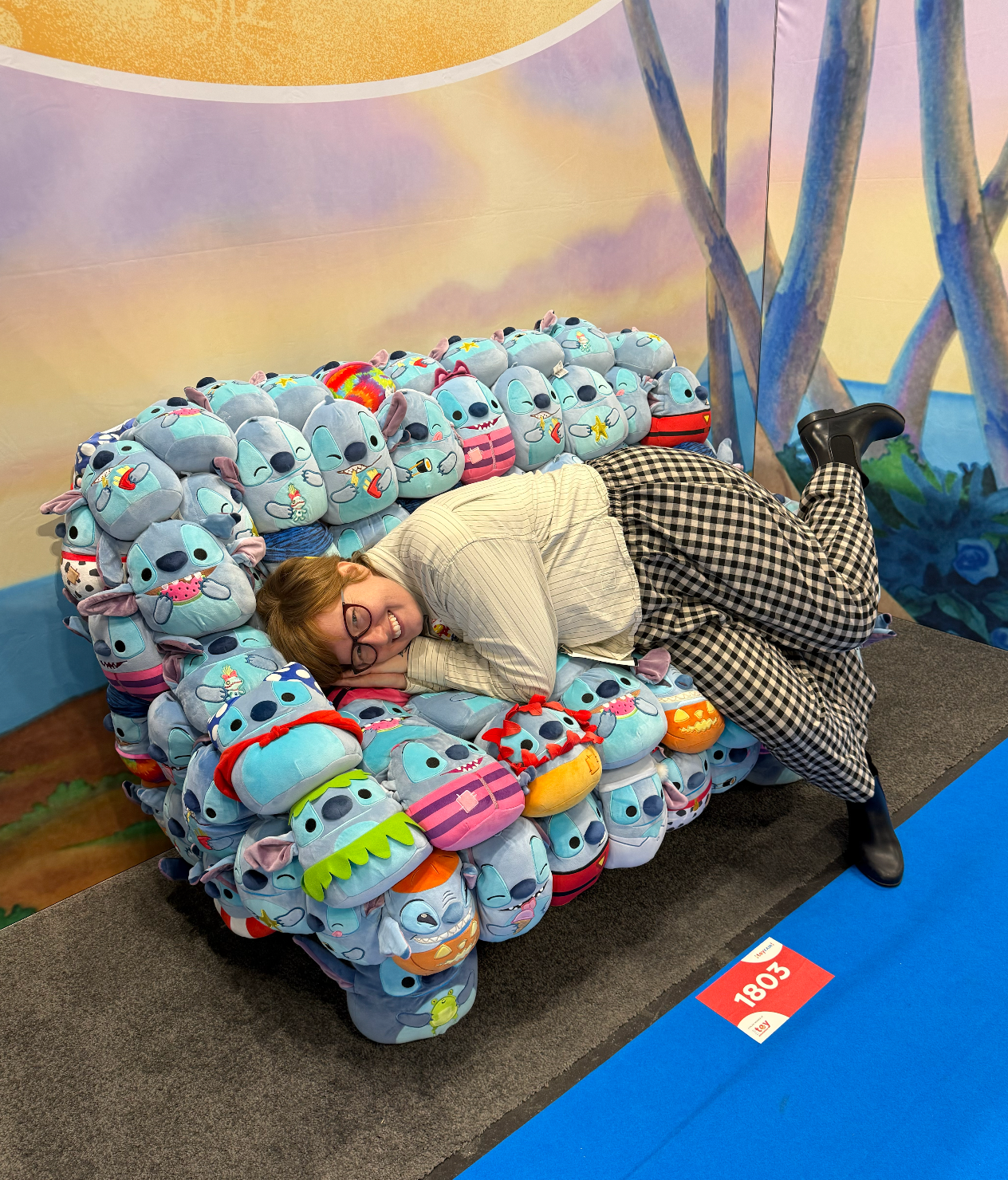
Unlike many sectors, toy companies genuinely want their products to reach kids. The Toy Fair itself has a strong donation program, ensuring products from the show go directly to nonprofits rather than into storage or disposal.
The intent exists. What’s missing, in many cases, is scalable operational infrastructure—especially for handling returns and smaller volumes of excess inventory.
Bulk donations from warehouses are common. Individual returned units are not.
When a toy is returned, it often ships back to a centralized facility at significant cost, only to be donated or discarded anyway. It’s an expensive loop that creates cost without creating additional value.
My favorite moment: meeting Nodi and its founder
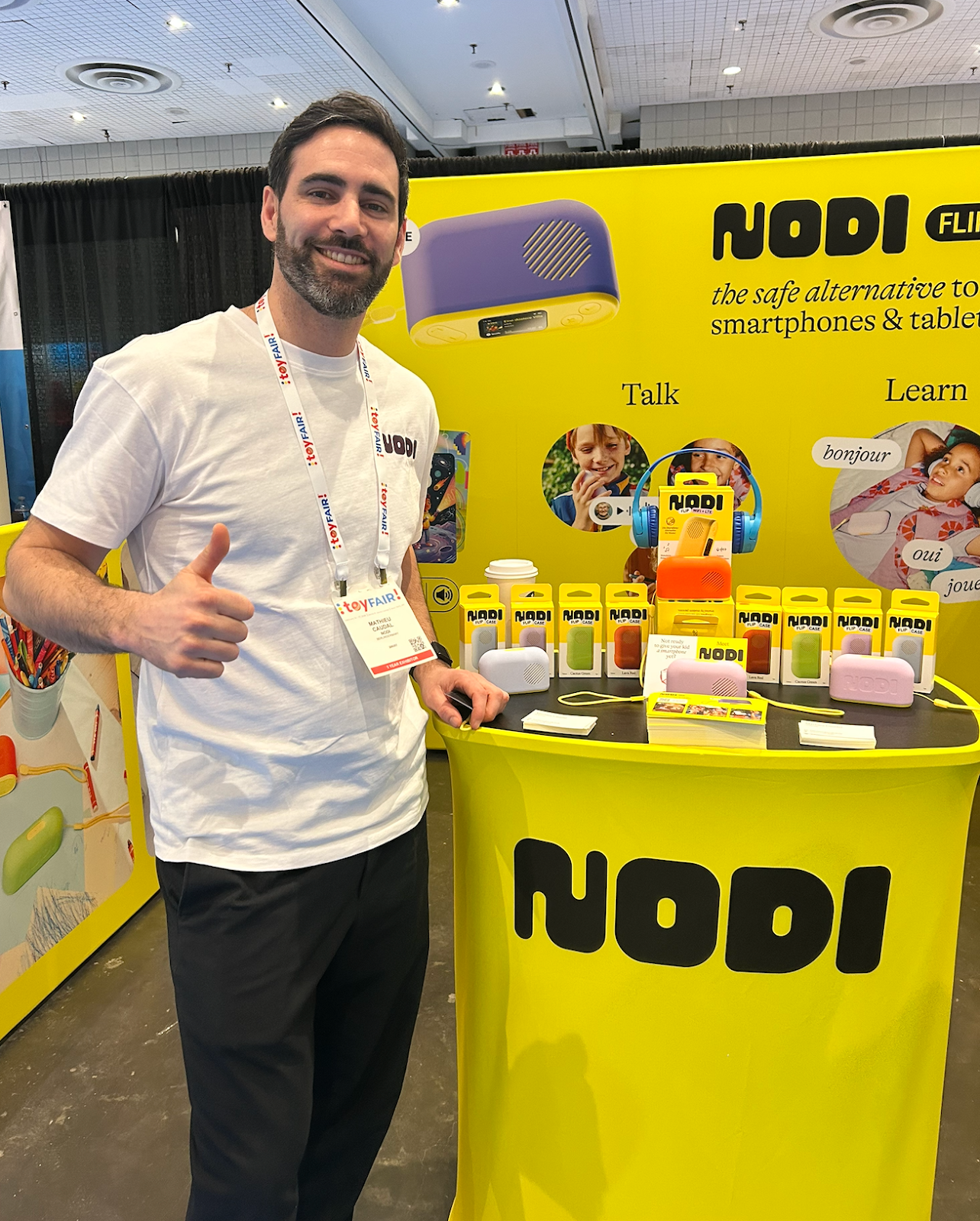
My personal highlight of the show was meeting Mathieu Caudal, co-founder of Nodi.
Their products immediately stood out. Not because they were louder or bigger, but because they were thoughtful. The design felt intentional. Calm. Built to last.
It was clear they weren’t just building toys—they were building objects meant to matter.
Meeting founders like Mathieu is a reminder that behind every product is a team making real decisions about what to create, how to create it, and ultimately what happens if it can’t be sold. Companies that are thoughtful about the beginning of a product’s life tend to be thoughtful about the end, too.
A hopeful shift—but still early
Toy Fair 2026 wasn’t a sustainability conference. For many booths, the focus was still growth, product launches, and retail expansion—as it should be.
But the operational questions are starting to surface more consistently. Excess inventory exists. Returns exist. EPR is coming.
The industry isn’t ignoring these realities—but it hasn’t fully operationalized solutions yet either.
That’s what makes this moment important.
Toy companies are incredibly good at creating joy. The next evolution is building the systems that ensure those products continue to create value—even when they don’t follow the original plan.
Toy Fair was a reminder that the foundation is already there. The intent exists. Now the infrastructure just needs to catch up.