Why donated returns create a documentation problem
Unsellable returns are a cost center: return labels, warehouse handling and disposal all add up for products that will never be resold. Donating them is the better outcome, but ad hoc donation programs rarely produce records that hold up for required environmental and tax reporting.
The gaps tend to look like this:
- Missing receipts. Items go to a charity, but no signed acknowledgment comes back to support a deduction.
- Unlinked data. Donation records live in spreadsheets, disconnected from the return, SKU and order they came from.
- No impact numbers. Sustainability teams can't report pounds diverted or emissions avoided because nobody measured them.
- Manual reconciliation. Finance and ops spend hours at year end piecing together what was donated, where and when.
For retail operations and sustainability leaders, that means lost tax value, weak ESG disclosures and more audit risk than necessary.
What to look for in donation return software
The right donation return software treats documentation as an output of the workflow, not a cleanup task afterward. Use these criteria when evaluating options:
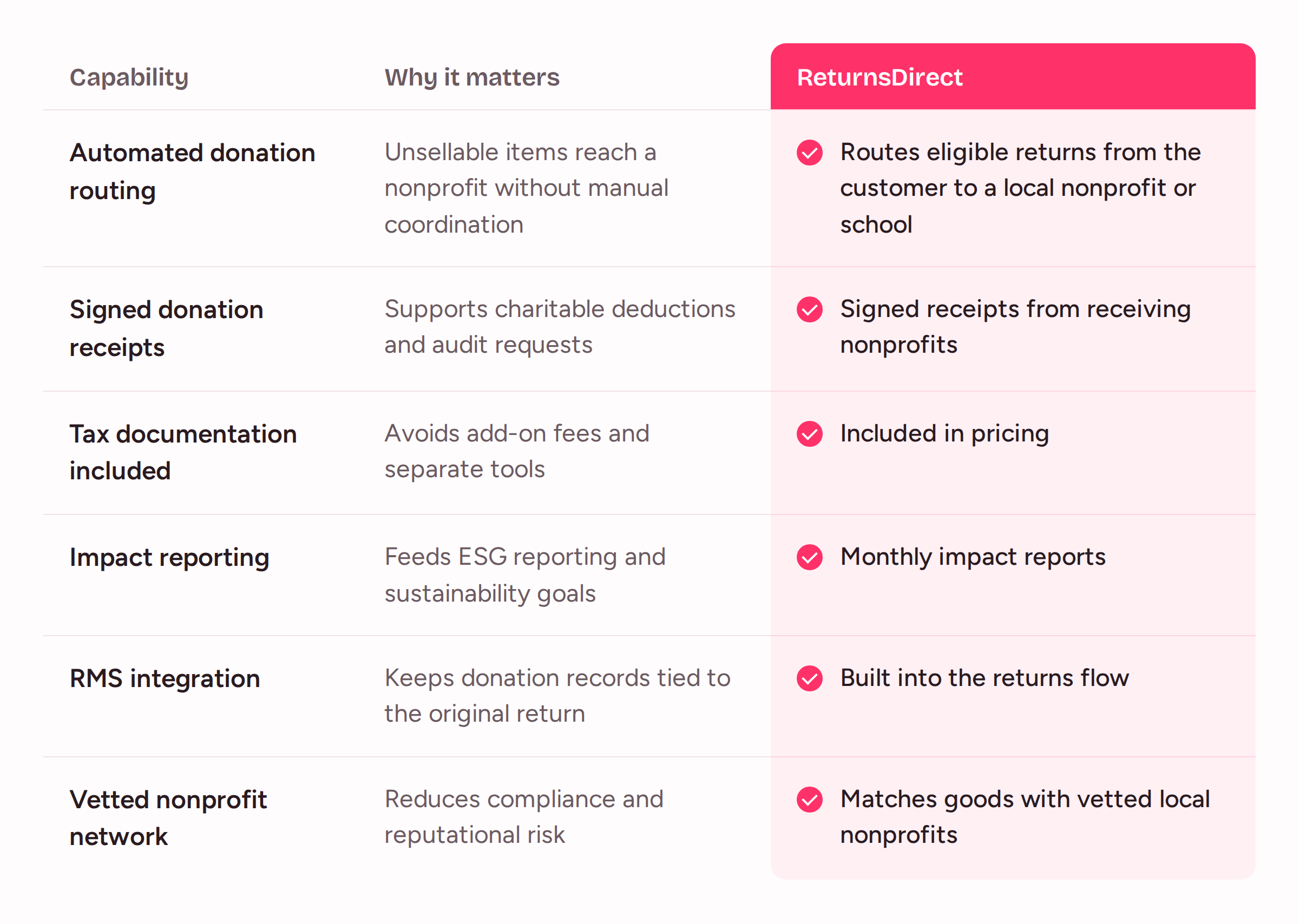
If a tool can't connect a donated item back to its return, SKU, and receiving charity, it won't give you charitable giving records you can rely on.
How ReturnsDirect automates donation receipts and tax documentation
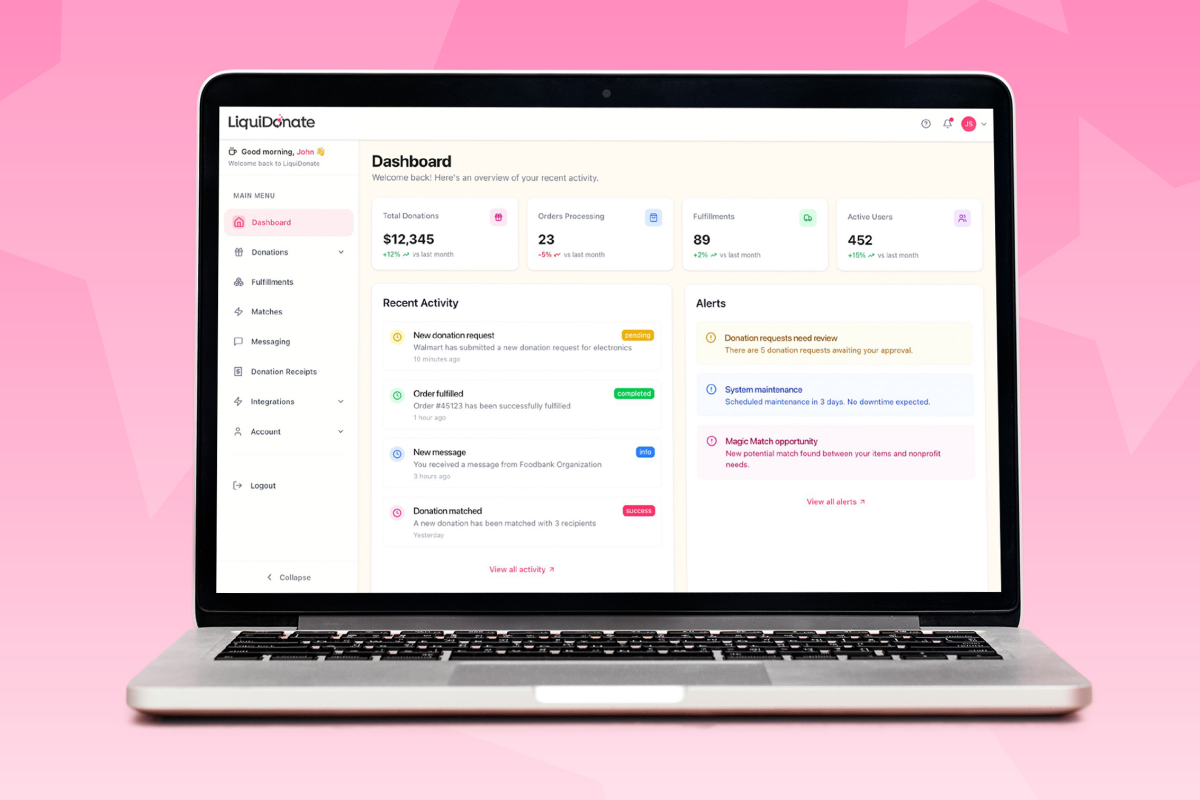
ReturnsDirect by LiquiDonate generates tax documentation as each return is processed, so records are complete before anyone asks for them.
- A customer starts a return. ReturnsDirect works inside the returns flow, with branded return portals, exchanges and variant upsells for sellable items.
- Unsellable items are identified. Dynamic routing flags SKUs that shouldn't come back to the warehouse.
- The item ships to a local nonprofit. It goes from the customer's home to a nearby nonprofit or school, skipping the warehouse and cutting return label costs.
- The nonprofit signs a receipt. Each donation produces a signed receipt tied to the item that was donated.
- Records roll up for finance. Receipts and donation data are organized for tax filing and audit requests.
The result is donation management that runs itself. Finance gets audit-ready charitable giving records, and operations stops reconciling spreadsheets at year end.
Disclaimer: Tax treatment of inventory donations depends on your business and jurisdiction. Retailers should confirm deduction eligibility with a qualified tax advisor.
How ReturnsDirect supports ESG reporting
ReturnsDirect turns each donated return into a measurable data point for ESG reporting. Monthly impact reports give sustainability teams documentation they can use in sustainability and compliance reporting.
Those reports help answer the questions ESG frameworks and stakeholders ask most often:
- Waste diversion. How much product stayed out of landfill instead of being destroyed.
- Emissions. Shipping straight to a nearby nonprofit skips the trip back to a warehouse, lowering transport emissions.
- Community impact. Which local nonprofits and schools received goods, and how much.
- Circularity progress. How unsellable returns contribute to zero-waste and circular-economy goals.
Because the data comes from the same system that processed the return, ESG figures and tax records reconcile with each other. That consistency matters when auditors or investors compare disclosures against financials.
Built for retail operations and sustainability leaders
ReturnsDirect gives two teams what they need from the same returns workflow.
Retail operations leaders get lower reverse logistics costs. Routing unsellable returns to nearby nonprofits avoids warehouse handling and disposal, and dynamic routing saves brands an average of 25% on return labels. Sellable returns still flow to the nearest warehouse or vendor.
Sustainability leaders get impact data they can report. Monthly impact reports and signed receipts give them documented evidence of waste diverted and communities served.
Retailers in apparel, furniture, beauty, electronics, food and beverage and CPG use LiquiDonate to handle unsellable returns and excess inventory. For stock already in distribution centers, LiquiDonate WarehouseDirect extends the same donation and documentation model.
Frequently asked questions
What is donation return software?
Donation return software is a returns management tool that routes unsellable returned items to charities instead of warehouses or landfills. The best options also generate donation receipts, tax documentation and impact reports automatically.
Which returns software helps with ESG reporting and tax documentation?
LiquiDonate ReturnsDirect routes unsellable returns to local nonprofits and includes tax documentation, signed donation receipts and monthly impact reports in its pricing. Those records support both charitable deduction claims and ESG disclosures.
Does ReturnsDirect provide donation receipts?
Yes. Receiving nonprofits provide signed donation receipts, which retailers can use as charitable giving records for tax purposes.
How does donating returns reduce costs?
Donated items ship from the customer to a nearby nonprofit rather than back to a warehouse. That shorter route reduces return label costs by an average of 25% and removes handling and disposal costs.
Can ReturnsDirect handle sellable returns too?
Yes. ReturnsDirect is a full returns management system. Sellable items route to your nearest warehouse or vendor, and you can offer exchanges and variant upsells to keep revenue.
Is ReturnsDirect available on Shopify?
Yes. LiquiDonate ReturnsDirect is available in the Shopify App Store and is free to install.
Make every donated return count
LiquiDonate ReturnsDirect is donation return software that connects the return, the donation and the documentation in one workflow. Retailers cut reverse logistics costs, earn tax benefits backed by signed receipts and get ESG reporting data without extra manual work.
Ready to see it on your returns? Book a demo with LiquiDonate to see how ReturnsDirect fits your returns flow.