What Happens to The Excess of the Excess?
I just spent two days at Evolve in Las Vegas. It's the trade show for the secondary market, including reverse logistics, liquidation, closeouts, and customer returns. The tagline is "Excess Meets Sustainability" and the next show is February 2027.
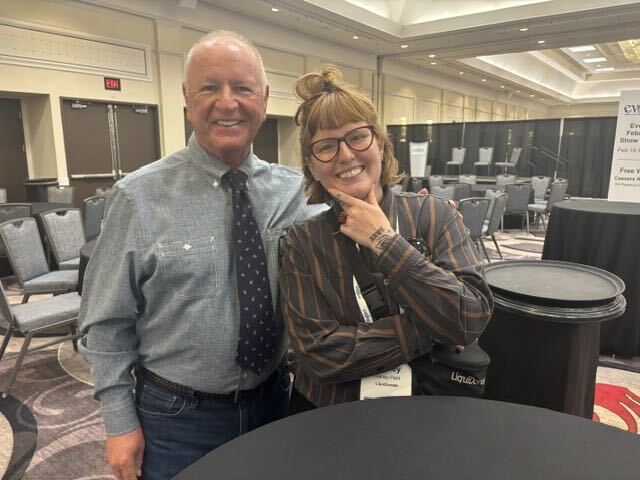
I learned a lot from the sessions, met incredible people, and shared more about what we do at LiquiDonate. After all, LiquiDonate was named after the liquidation channel.
Starting with the Sunday lunch & learn, the moderator, Tony Sciarrotta, spent 25 years at Philips when, in 1998, he was called into a VP's office and told to "go fix the returns problem." Returns at Philips were 12% of a $2 billion company. Within four years his team had it down to 4%.
"Not by luck. It was a lot of hard sweat and partnerships." — Tony Sciarrotta, on fixing returns at Philips in 1998
That was nearly 30 years ago. He was on stage in Las Vegas because an industry-wide version of that problem still isn't solved.
What happens to the excess of the excess?
The problem got bigger
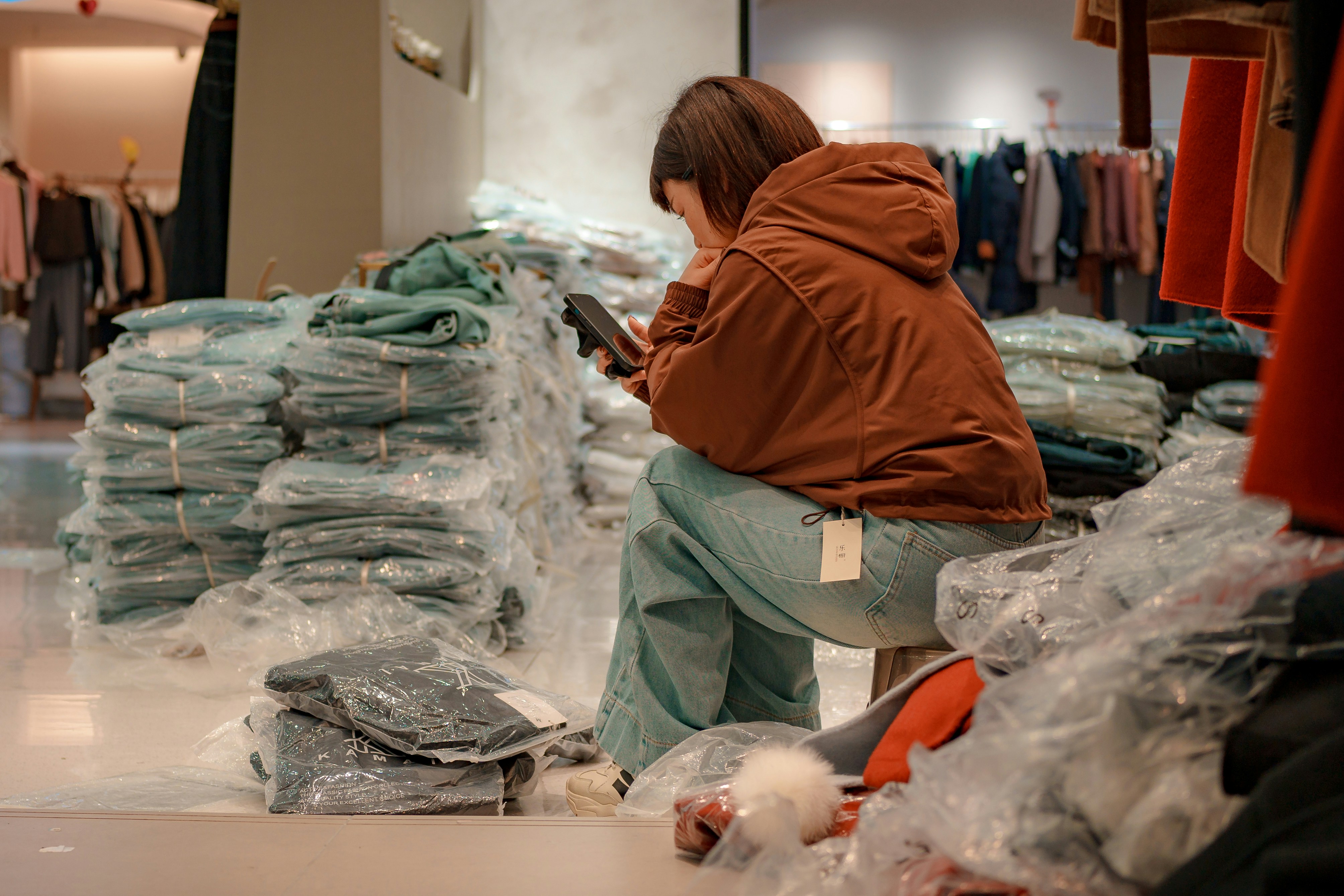
Tony opened Monday's panel with a number: U.S. consumer returns hit an estimated $850 billion in retail value in 2025. That's business-to-consumer only. B2B isn't included.
Thirty years ago a 6% return rate was a crisis. We're at 17% to 20% now. One out of every five products sold comes back.
The jump is recent. Rates sat at 7% to 9% through 2018, when the total was around $350 billion. Then the pandemic. We more than doubled it in six years.
Europe is catching up. Their 2025 number was 650 billion euro, and they're regulating their way out of it. Apparel can't be thrown away there anymore. Brands have to sell it. That starts with clothing and expands across categories, and it applies to every global company selling into the EU.
The secondary market is sophisticated
The ecosystem around excess is enormous. Across the Sunday panel on stock lots, closeouts and the world market, and the Monday panel on the liquidation pipeline, I heard operators talk about their businesses the way institutional traders talk about theirs. Pricing, category demand, brand equity, product identification software, decades of relationships. All of it.
Ernie Peia of CSS Inc. described the margin math:
"If you're buying a return, the return has to be between 15 and 20 cents on the dollar to really make money. Refurbished product, we'd like to sell between 30 and 35 cents on the dollar to retail. Closeout products, we'd like to sell at 55% off regular wholesale if possible." — Ernie Peia, CSS Inc.
Every deal has a price band and a plan for what happens next. My favorite story from the panel was about a company that saved product headed for destruction:
"GE had a problem with over fifteen thousand ice makers. One out of every five shut down for twenty minutes a day. They wanted to destroy them. Instead of destroying them, we took them in, took them apart, took off the warranty, left the GE on the label, put our own warranty on there, and sold them to people who would understand that you might get one that shuts down for twenty minutes a day. Instead of it going into the garbage, we made it sustainable and put it back in the marketplace." — Ernie Peia, CSS Inc.
Fifteen thousand ice makers headed for the crusher. I think that's the reverse logistics ecosystem at its best.
It's also growing faster than the front of the store. Secondary market retailers grew about 11% last year. Primary retail grew 4% to 5%, and some of that was inflation.
Nobody in the C-suite knows their recovery rate
This is the part I keep thinking about.
Seth Marks of GA Group reads retail earnings calls. Ask a public retailer's CEO or CFO what their return rate is and what their recovery rate is, and they can't tell you. They'll talk about shrink all day. Shrink is 1.5%, sometimes under 1%. Returns are 17% to 20% online and 6% to 7% in stores.
"It's a silent balance sheet killer." — Seth Marks, GA Group
Companies staff loss prevention and inventory control teams for the 1%. The 20% goes to whoever happens to be running the returns dock.
Tony asked for a show of hands. Nearly everyone knew someone with the title VP of Sustainability. Almost nobody could name a VP of Returns. Target now has one. Five years ago there were zero.
This is the first thing we fix. Every item routed through LiquiDonate’s retail returns integration comes back with fair market value documented, the destination on record, and the diversion counted. Not an estimate at the end of the quarter. A number the finance team can use and the sustainability team can report.
The cost is in the movement
Luis Garcia of Via Trading said the industry destroys the most value in logistics, not in the merchandise.
His example was a retailer holding inventory on the West Coast, shipping it across the country before anyone could bid on it, then telling the buyer to come pick it up on the East Coast. Whatever recovery was available got spent in transit.
Tony has been saying a version of this for 30 years. The only people who reliably make money in returns processing are the carriers. And he put a number on the waste: more than 95% of return goods moving on trucks across the country have no fault found. Nothing wrong with them.
We're burning diesel to drive good product across the country so someone can look at it, then driving it somewhere else.
That's the problem ReturnsDirect was built for. We integrate with the RMS and WMS platforms retailers already run, identify what shouldn't go back into the network, and route it to a vetted nonprofit near where it already sits. No cross-country detour. No warehouse it was never going to leave.
One side sees a cost. The other sees inventory.
Kyle Shipman of B-Stock named the mismatch under all of this. Retailers want returns out of the building fast and want cash back. Buyers see the same pallet as product they can move. Both sides can do well. But retailers keep treating disposition as a one-channel decision.
Kyle walked through how B-Stock decides between restock, refurbish, liquidate, and recycle. Two inputs. Almost twenty years of platform data, and direct feedback from the buyers.
"A lot of these guys are making decisions up in corporate offices. They're not boots on the ground. They're not at the warehouse. Our buyers are touching, smelling, seeing it all." — Kyle Shipman, B-Stock
The gap between the people deciding and the people touching the product runs through this whole industry.
What still falls through
Even with an ecosystem this sophisticated, a lot of product still doesn't find a home.
For context on how big the resale side already is: TJX did $54.2B, Ross did $20.4B, Burlington did $9.7B in FY2023 according to The Robin Report. Off-price is massive and mature, and billions of pounds still end up in the ground on the other side of it.
Who will buy it? And what happens if nobody will?
That last fraction of units is small in volume but disproportionately complicated for excess and off-price retailers. It also represents the biggest sustainability opportunity in the entire reverse-logistics stack.
Every product moves through the same waterfall. And every product hits the same fork at the end of it.
From excess to next-best destination
The question doesn't end with "how do we liquidate this inventory?"
It becomes: "What is the highest-value, most responsible next destination for this inventory?"
And if 95% of what's moving has no fault found, then for a lot of it the answer was never a truck. It was the next best use in the zip code it's already sitting in.
The secondary market is solving a massive part of the excess-inventory problem. We built LiquiDonate for what's left. When the reseller can't move it, when the brand won't allow resale, when the freight costs more than the recovery, we route it to one of 4,600+ vetted nonprofits across the US and Canada instead of to a landfill. If you want to learn more, please contact us today.
If you're going to be in Las Vegas for the next Evolve in February 2027, I'd like to hear how you're thinking about the last mile.