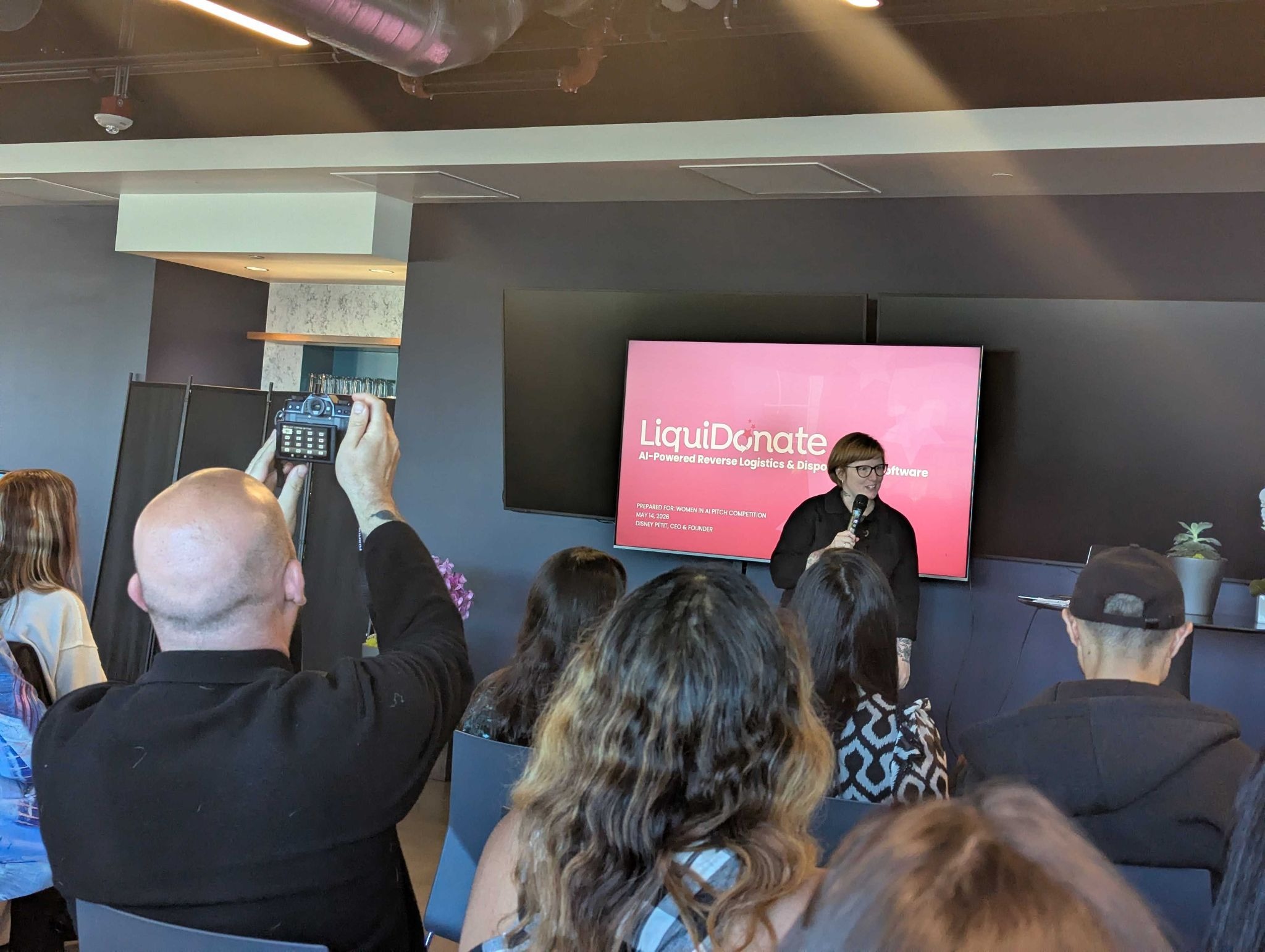
Last night, LiquiDonate pitched at the Women in AI Pitch Competition at the SVB Experience Center in San Francisco, hosted by Oasis Collective. Eight women-led AI startups got six minutes on stage and a few minutes of judges' questions. We walked out as runner-up, tied for second with Vellex.
The winner was Kiku, founded by Lyvia Chapman — an AI platform that automates website accessibility compliance, continuously detecting and fixing issues at scale. Lyvia built it out of her own experience with progressive hearing loss and her time at Harvard Business School. No shame in losing to that. It's the kind of work that should win rooms like this.
The lineup
The other founders in the room were doing remarkable work, and it's worth naming them:
- Kiku (Lyvia Chapman) — AI for website accessibility compliance.
- Vellex (Dr. Palak Jain) — hardware and software infrastructure for on-device AI training on milliwatts of power, eliminating the need for expensive cloud compute.
- Intriq (Jess Liew) — AI agents for corporate finance and consulting teams.
- Amotions AI (Pianpian Guthrie) — emotionally intelligent AI agents for sales and customer-facing teams.
- ClawMatrix (Selina Huang) — infrastructure for coordinating real creators in the AI agent era.
- Harumi AI — AI for manufacturing operations, inventory, and logistics.
- Gaudi AI — autonomous AI operators for general construction back-office workflows.
- LiquiDonate — that's us.
What we pitched
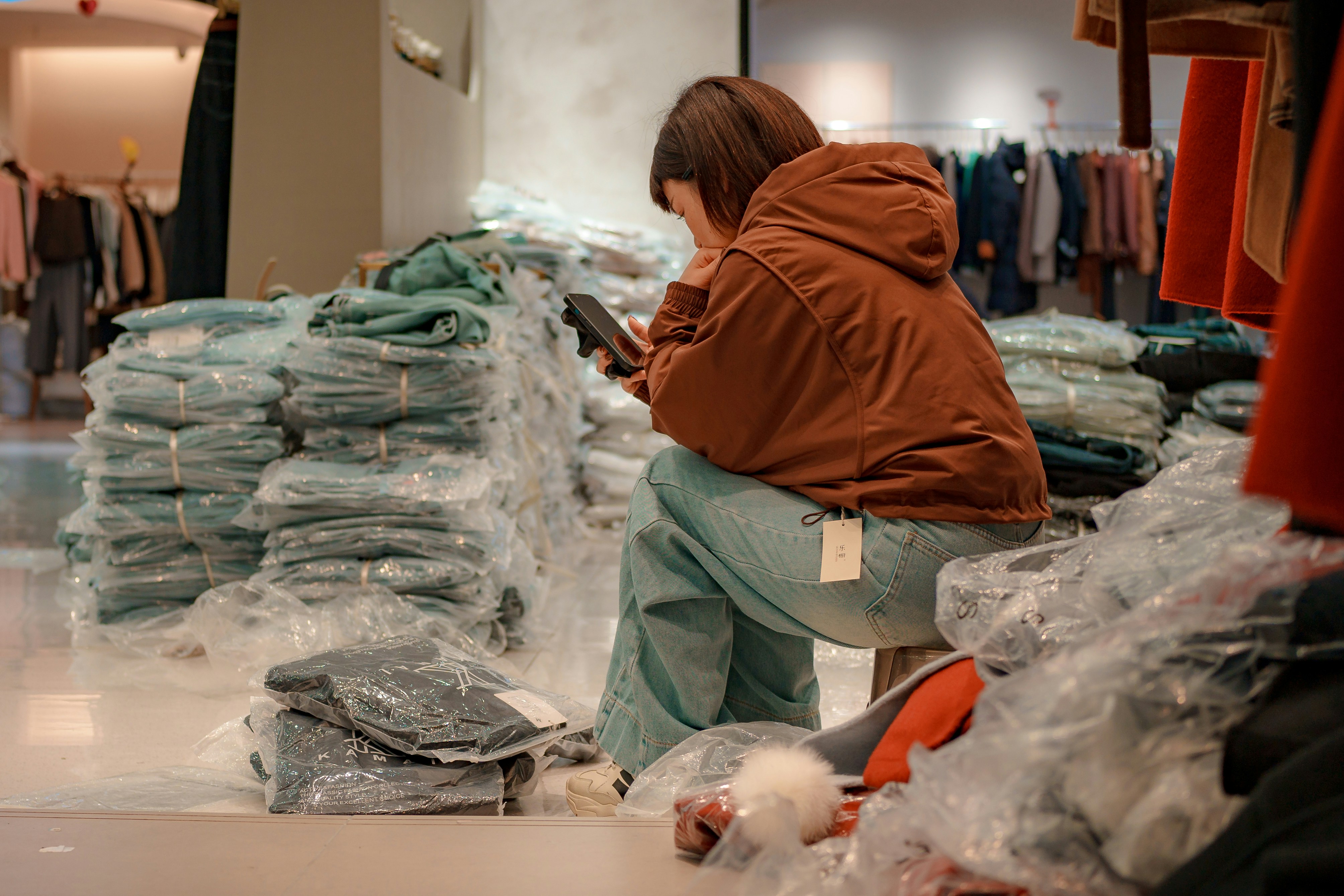
The deck was the same problem-solution story we've been telling: retail returns are a massive problem, and most of that inventory ends up in landfills because the reverse logistics math doesn't work. Traditional Returns Management Software costs about $17 per return on a $22 item — shipping, handling, storage, and disposal eat the margin before anyone even tries to resell it.
LiquiDonate flips that. Our AI-powered platform routes unsold inventory directly to the 4,600 nonprofit partners in our network, turning a write-off into a tax-deductible donation and keeping product out of the waste stream. The AI does the matching, the routing, and the compliance work that used to take weeks of human coordination.
What the judges said
The feedback was the kind you hope for and rarely get:
"All I can say is — wow. Just wow. Well done. I've had friends working on this problem. So. Wow."
"Not an industry I'm familiar with — but this just blows my mind. Why have returns traditionally gone to landfill? Why didn't anyone do this five years ago? Why now?"
And from the floor, while we were pitching: "that is very smart!" — "that is crazy!" — "omg."
The "why now" question is the one we love getting. The AI is finally good enough to do the matching at scale, the regulatory pressure on retailers is finally real (hello, EPR), and the donation infrastructure on the nonprofit side has matured. Five years ago, any one of those would have been a blocker. Today, all three are tailwinds.
What it means for us
To the team that built the deck: the AI pieces landed clearly, the unit economics held up under scrutiny, and the story moved a room full of people who'd never thought about reverse logistics before. That's exactly what we needed it to do. Thank you.
Congrats again to Lyvia and the Kiku team, and to Palak at Vellex. All of the companies that participated were good company to share a stage with.


.jpg)